
WELCOME BONUS 300%
UP TO €2000 + 100
FREE SPINS
UP TO €2000 + 100
FREE SPINS
Home → Blackjack
Blackjack at Freshbet Casino: Variants, Rules and Payouts
16 vs 10 played incorrectly: most common error
The house edge for standard six-deck blackjack stands at 0.46 percent when players adhere to the mandatory basic strategy. Deviating from these optimal moves against a dealer ten upcard increases the casino's advantage beyond this baseline figure. High rollers who ignore the mathematical necessity of hitting on sixteen face significantly steeper long-term losses. This error erodes the bankroll faster than any other single tactical mistake at the table.
Dealer standing on soft seventeen reduces the house edge by 0.22 percentage points compared to hitting rules. However, incorrect player decisions negate these favorable rule modifications entirely. The RTP drops below the 99.54 percent threshold when basic strategy is abandoned. Consequently, the effective cost per hour rises sharply for high-stakes participants.
Resplitting aces improves the RTP by approximately 0.08 percentage points, offering a marginal gain for disciplined players. Double after split provides an additional 0.14 percentage point reduction in the house edge. These specific rule variations only benefit those who execute perfect play. Any deviation resets the advantage back toward the unfavorable baseline.
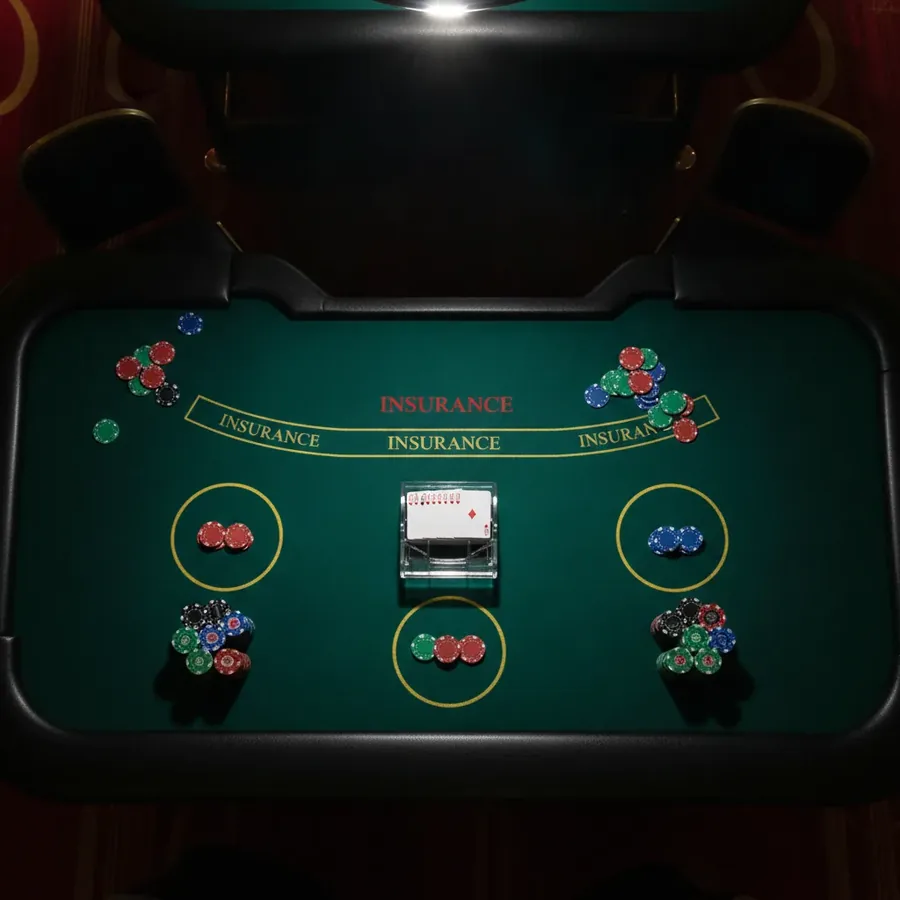
Blackjack Party runs with two hosts
Evolution offers Blackjack Party as a live dealer variant with betting limits ranging from 1.00 EUR to 1,000 EUR. The game features two moderators creating a party atmosphere rather than focusing solely on statistical optimization. This social format diverges from the serious environment required for high roller strategy execution. Players must adjust their expectations regarding the pacing and tone of the session.
Infinite Blackjack allows unlimited seats at the table with stakes between 1 and 5,000 EUR. It includes four side bets such as Any Pair and 21+3 which carry distinct risks. The RTP for Infinite Blackjack sits at 99.47 percent under optimal conditions. High rollers can utilize the higher limits to manage variance more effectively than in party formats.
Quantum Blackjack Plus Live by Playtech accepts wagers from 1 to 5,000 EUR. Quantum multipliers reach up to 1,000x on three-card combinations totaling 21 points. This mechanic introduces volatility that contradicts steady bankroll management strategies. The RTP remains at 99.57 percent when playing with optimal strategy despite the multiplier features.
Bonus Lost Due to 10 Percent Contribution
The welcome bonus offers 300 percent up to €2,000 plus 100 free spins for new registrations. Table games contribute only 10 percent toward the wagering requirements attached to this promotion. A €1,000 bet on blackjack counts as just €100 toward the turnover target. This restriction forces players to use slots for the majority of their requirement fulfillment.
Slots contribute 100 percent to the wagering calculation, making them the primary vehicle for clearing the bonus. High rollers relying on table games will find the turnover process inefficient and costly. The discrepancy between slot and table contributions creates a strategic dilemma for large deposits. Players must balance entertainment preferences with the financial reality of the terms.
A €2,000 bonus requires significant volume to clear given the low table contribution rate. If a player attempts to wager exclusively on tables, the required turnover becomes prohibitive. The 10 percent contribution rate effectively multiplies the effort needed compared to slots. This structure heavily favors slot gameplay over traditional table game strategies.
When can you increase your bet?
Players may double their bet when holding exactly two cards totaling nine, ten, or eleven points. This action allows doubling the original stake for a single additional card. High rollers often use this opportunity to capitalize on favorable deck compositions. The move is restricted to specific totals to maintain the game's mathematical balance.
Splitting is permitted when the first two cards share the same rank, creating two independent hands. Most variants allow splitting up to four separate hands simultaneously. Resplitting aces is usually limited to receiving only one additional card per ace. This limitation prevents excessive multiplication of the initial wager on weak hands.
Double after split enhances the RTP by approximately 0.14 percentage points for the player. This rule permits doubling down on hands created through a split operation. It provides additional flexibility for managing risk during volatile sessions. The ability to double post-split is a critical factor for advanced strategy implementation.
Bet two percent of bankroll per hand
High rollers typically allocate a specific portion of their total bankroll to each individual hand played. Betting two percent ensures sufficient resilience against the natural variance inherent in blackjack. A €10,000 bankroll supports a €200 bet per hand without excessive risk of ruin. This method preserves capital during inevitable losing streaks encountered by all players.
The house edge of 0.46 percent means the casino retains a small fraction of every wager long-term. Consistent bet sizing prevents emotional reactions to short-term results. Increasing stakes after losses leads to rapid depletion of funds due to compounding risks. Maintaining a fixed percentage protects the core bankroll from catastrophic loss.
Side bets like Insurance carry a house edge of 7.47 percent, drastically reducing overall returns. Avoiding these bets aligns with strict bankroll management principles for serious players. The insurance wager pays 2:1 but is statistically disadvantageous for non-counters. Excluding side bets keeps the effective house edge closer to the base 0.46 percent figure.
Blackjack variants at a glance
| Variant | Payout | House edge | Rule | Bet range |
|---|---|---|---|---|
| Blackjack Liberal Vegas Strip (liberale Regeln, 3:2) | 99.72% | 0.28% | Günstigste Regelkombination: S17 + DAS + Resplit + Late Surrender. Standardabweichung 1,15 | Blackjack 3:2, Gewinn 1:1 |
| Blackjack Surrender (Late Surrender) – Regel-Effekt | n.a. (Regel-Modifikator) | −0.08 Prozentpunkte | Spieler gibt Hand nach Dealer-Blackjack-Prüfung auf, verliert die Hälfte des Einsatzes. Verbessert RTP um ca. 0.08 Prozentpunkte. Early Surrender ist wesentlich wertvoller (bis −0.6 Prozentpunkte), aber extrem selten. | Rückzahlung 50% des Einsatzes |
| Blackjack Auszahlung 6:5 statt 3:2 (6 Decks) | 98.15% | 1.85% | Ersatz von 3:2 durch 6:5 fügt exakt +1.39 Prozentpunkte zum Vorteil des Casinos hinzu – stärker als jede andere Regeländerung. Bei $10 Einsatz zahlt Blackjack $12 statt $15. | Blackjack 6:5, Gewinn 1:1 |
| Blackjack Ein Deck, klassische Regeln, 3:2 | 99.85% | 0.15% | Weniger Decks = niedrigerer Vorteil; ein Deck gibt ca. −0.48 Prozentpunkte gegenüber 8 Decks. Oft durch 6:5 Auszahlung kompensiert. | Blackjack 3:2, Gewinn 1:1 |
| Blackjack Split / Double / H17 – Regel-Effekte | n.a. (Regel-Modifikatoren) | H17 +0.22 Prozentpunkte; RSA −0.08 Prozentpunkte; DAS −0.14 Prozentpunkte | Dealer Hits Soft 17 verschlechtert RTP um 0.22 Prozentpunkte; Resplit Aces verbessert um 0.08 Prozentpunkte; Double After Split verbessert um ca. 0.14 Prozentpunkte; 6 Decks statt 8 – ca. 0.02 Prozentpunkte. | Double – Einsatz ×2 mit einer Karte; Split – bis 4 Hände; Ass-Split meist mit einer Karte. |
| Blackjack 6 Decks, S17, DAS, DOA, Auszahlung 3:2, Basisstrategie | 99.54% | 0.46% | Dealer steht auf Soft 17; Verdopplung auf jeder Zweierkarte; Verdopplung nach Split erlaubt; keine Aufgabe. Basisstrategie ist für diesen Wert zwingend | Blackjack 3:2, normaler Gewinn 1:1, Insurance 2:1 |
Even Money only possible with Dealer Ace
The Even Money option is strictly tied to the dealer showing an Ace, which triggers a side-bet context for Insurance paying 2:1. This specific payout ratio creates a house edge of 7.47%, making it a statistically poor choice compared to the main game RTP of 99.54%. Accepting this offer converts a potential Blackjack into a standard win, eliminating the 3:2 bonus payout entirely.
Basis strategy dictates always declining Insurance unless counting cards yields a True Count of +3 or higher. The separate side bet reduces the overall return, as the 7.47% house edge significantly drags down the expected value for high rollers. Rejecting the even money preserves the mathematical advantage inherent in the 3:2 Blackjack payout structure.
The decision point occurs immediately after the dealer checks for Blackjack but before player actions like doubling or splitting. High stakes players often face larger pots where preserving the 3:2 variance outweighs the security of an even money guarantee. Forgetting this rule effectively hands over additional equity to the casino on every qualifying hand.
Four hours of play with 300 EUR bankroll
A 300 EUR bankroll requires precise stake sizing to sustain four hours of action at Infinite Blackjack tables with limits from 1 to 5,000 EUR. Assuming a conservative average bet of 10 EUR per hand and a pace of 60 hands per hour, the total turnover reaches 2,400 EUR. This volume tests the volatility of the 99.47% RTP against the inevitable swings of the 1.15 standard deviation.
The Quantum Blackjack Plus variant allows bets up to 5,000 EUR with multipliers reaching 1,000x on three-card combinations. A single 300 EUR session cannot withstand the variance of such high-limit tables without risking immediate ruin. Players must scale down to the lower end of the betting range to ensure the bankroll survives the full duration.
Table games contribute only 10% toward the wagering requirements of the 300% welcome bonus up to 2,000 EUR. To clear a hypothetical 2,000 EUR bonus, a player needs 20,000 EUR in turnover, which takes significantly longer than slots contributing 100%. This restriction forces high rollers to prioritize pure profit generation over bonus chasing during extended sessions.
What doesn't count towards turnover at 10 percent?
All table games, including Blackjack variants and Live Dealer options, contribute exactly 10% toward the wagering requirements of the 300% welcome bonus. This means every 100 EUR wagered on Infinite Blackjack or Quantum Blackjack Plus only counts as 10 EUR toward the required turnover. Slots are excluded from this low contribution rate, offering a much faster path to unlocking funds.
The 300% match up to 2,000 EUR creates a substantial liability that demands careful bankroll management when playing live blackjack. With a 99.54% RTP on standard six-deck games, the theoretical loss rate is low, but the 10% contribution penalty severely extends the time needed to clear the bonus. High rollers should calculate if the bonus value outweighs the opportunity cost of locked funds.
Limited access to side bets like Any Pair or Hot 3 in Infinite Blackjack further complicates the turnover calculation. These side wagers also fall under the 10% table game category, diluting the effective contribution rate even more. Players seeking rapid clearance must stick to base game strategies rather than chasing high-variance side outcomes.
Surrender vs Playing Out on 16 vs 10
Surrender rules allow players to forfeit half their bet when holding a hard 16 against a dealer 10, reducing the house edge by 0.08 percentage points. This Late Surrender option is available in specific variants but does not apply if the dealer has already checked for Blackjack. Taking surrender saves 50% of the stake instead of risking a total loss on a losing hand.
The strategic benefit of surrender becomes critical for high rollers facing large wagers where variance can quickly deplete a bankroll. Without this rule, the house edge increases, negatively impacting the long-term expectation of the session. Comparing this to Early Surrender, which offers up to -0.6 percentage points improvement, the late version is less valuable but still superior to playing out.
Players must distinguish between Late Surrender, allowed after the dealer checks, and Early Surrender, which is extremely rare. Using surrender incorrectly on a soft 16 or against a dealer 9 would be a costly mistake that ignores the optimal basis strategy. Correct application ensures the player minimizes losses during unfavorable deck compositions.
Shoe, Cut Card, and 75 Percent Penetration
The use of six decks in standard Blackjack variants provides a baseline house edge of 0.46% when combined with S17 and DAS rules. Increasing the number of decks from one to six typically raises the house edge, as seen in the comparison between 0.15% for single deck and 0.46% here. More decks reduce the effectiveness of card counting strategies for high rollers tracking penetration.
Penetration depth determines how many cards are dealt before reshuffling, directly influencing the potential for advantage play. While 75% penetration is mentioned as a threshold, specific table limits vary, with some live tables allowing unlimited seats and continuous shuffling mechanisms. Deeper penetration allows skilled players to capitalize on favorable counts, whereas shallow cuts protect the casino's margin.
Live tables like Quantum Blackjack Plus operate with different mechanics, potentially altering traditional penetration metrics due to random multipliers. The 99.57% RTP assumes optimal strategy, which relies heavily on knowing the remaining deck composition. Players relying on basic strategy alone will find the house edge remains at 0.43% regardless of penetration nuances.
Double Down vs Simple Hit on 11
Double Down allows a player to double the initial stake for one additional card, multiplying the potential return by two in favorable counts. This aggressive move shifts variance significantly compared to a simple hit, which preserves the bankroll but yields lower average gains per hour. High rollers utilizing this tactic must accept higher volatility to chase the mathematical edge provided by the dealer's upcard.
The house edge increases by approximately 0.22 percentage points when the dealer hits soft 17, making optimal doubling decisions critical for maintaining profitability. Resplitting Aces improves the RTP by 0.08 percentage points, while doubling after split adds another 0.14 percentage points to the player's theoretical return. These rule modifiers collectively reduce the casino's advantage, rewarding disciplined execution of basic strategy during high-stakes sessions.
Contact
Live - online chat
Banking









Providers












Freshbet Casino 2026